
You will find two kinds of articles here: reports from completed Traydon orders and guides on spare parts, materials and standards. Every article ends with a list of the details that turn a request into a quotation quickly.
We do not name customers, delivery locations or order values. The images are AI-generated illustrations.
All articles
Filter by industry
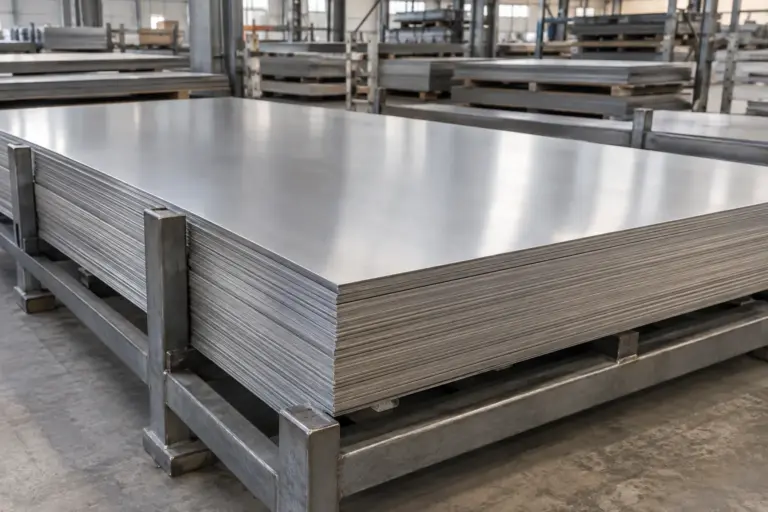
Sheets made of nickel high-temperature alloy
Two orders for Alloy 75 sheets: what the nickel-chromium alloy does and what a request for special sheets should contain.
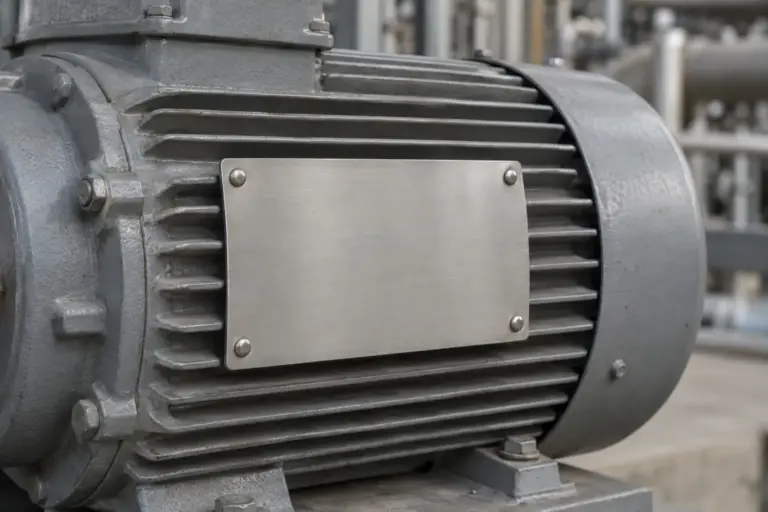
Reading nameplates: the basis of every spare part request
Which nameplate details matter for a matching replacement and how to carry them completely into a request.
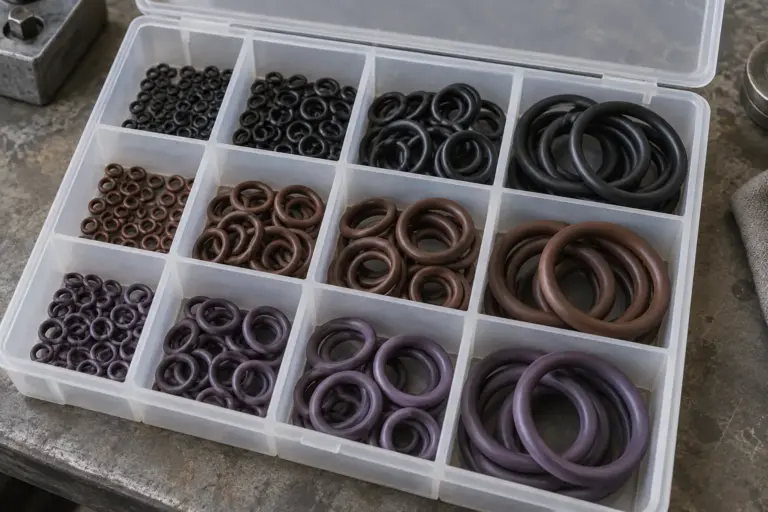
O-rings: materials NBR, FKM, EPDM and dimensions
Which O-ring material suits oil, water or high temperatures and how to state dimensions and hardness correctly.
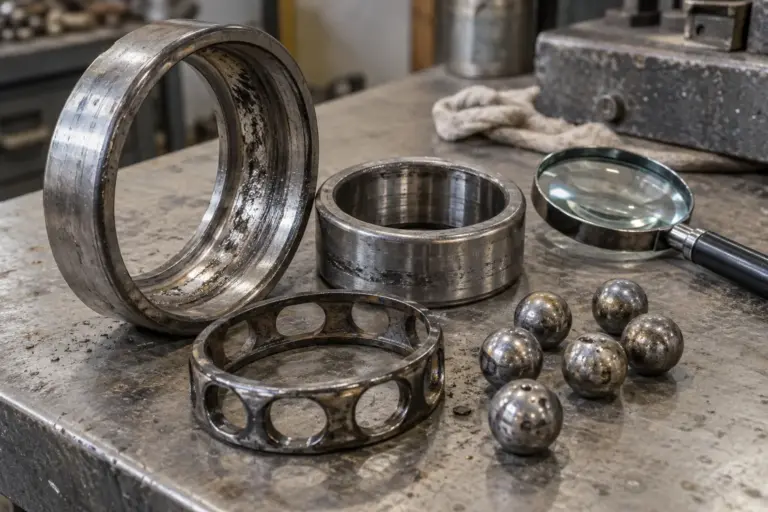
Recognising bearing damage and finding causes
Fatigue, contamination, current passage or mounting errors: how to recognise bearing damage and why the cause matters.
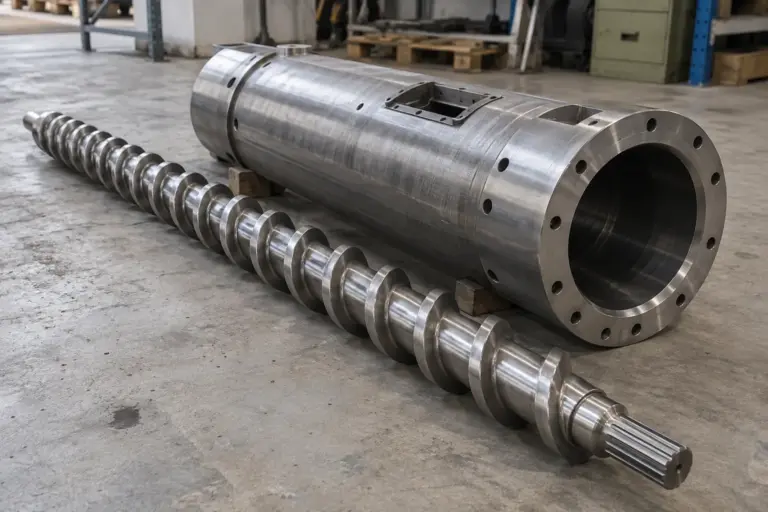
Wear on extruder screw and barrel
Why the clearance between screw and barrel grows, how to measure wear and which details matter for replacement or refurbishment.
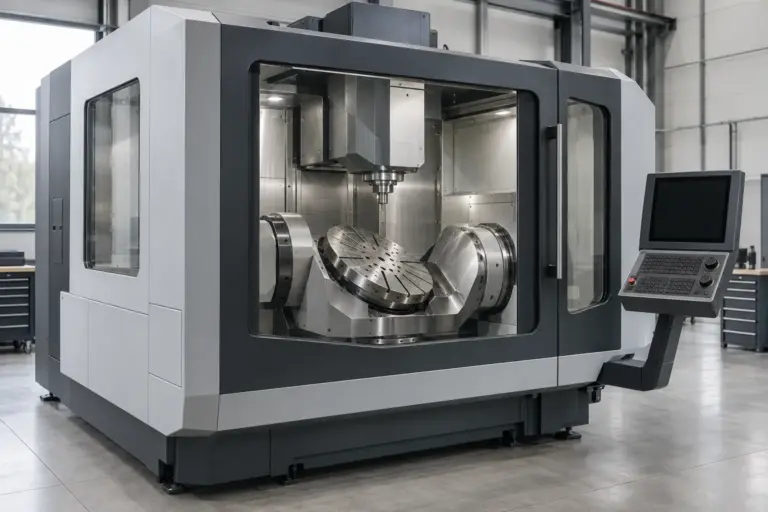
Two 5-axis machining centres
Traydon sourced two 5-axis machining centres including freight. What 5-axis machining offers and what a machine request needs.
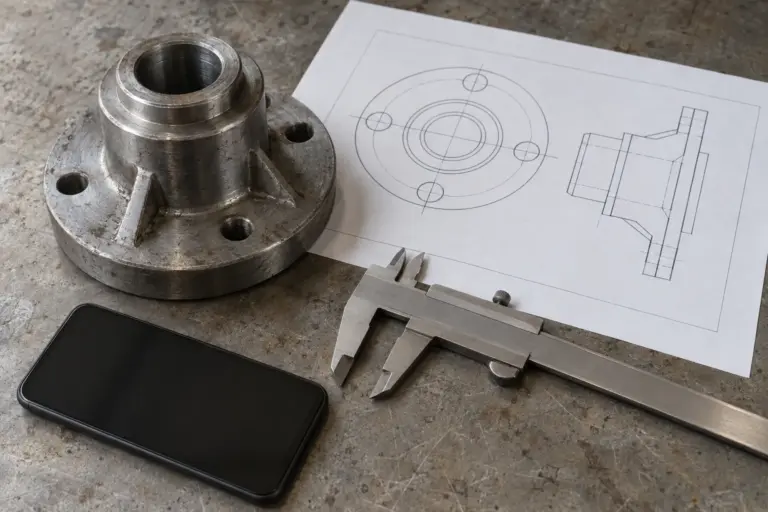
Spare part without part number: drawing, photo and dimensions
No number, no nameplate: with a drawing, photos and dimensions a spare part can still be sourced or remanufactured.
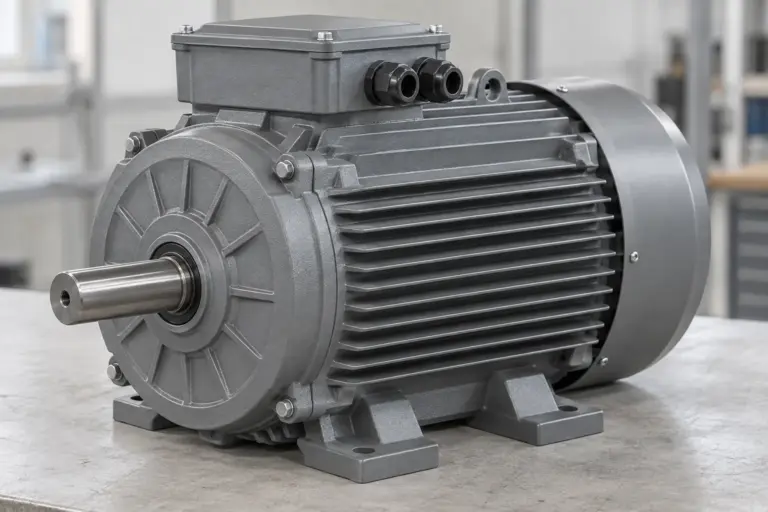
Efficiency classes of electric motors: IE1 to IE4
What the efficiency classes to IEC 60034-30-1 mean and what to consider when replacing an older motor with a more efficient one.
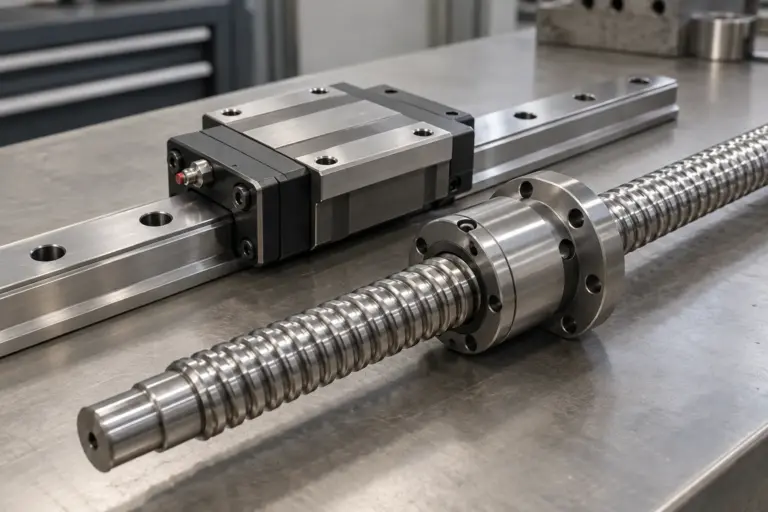
Linear guides and ball screws
Size, preload, lead and accuracy class: what matters when replacing profile rail guides and ball screws.
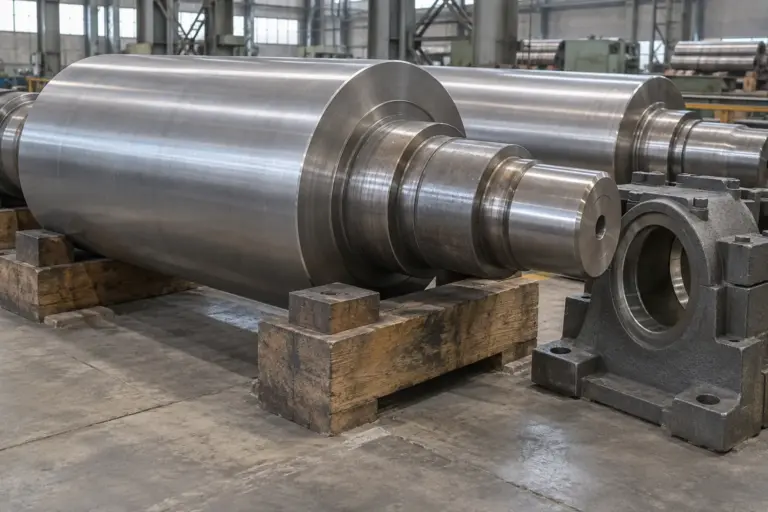
Rolls and roll bearings in the rolling mill
Work and backup rolls, roll materials and the bearings in the chocks: what wears in a rolling mill and gets replaced.
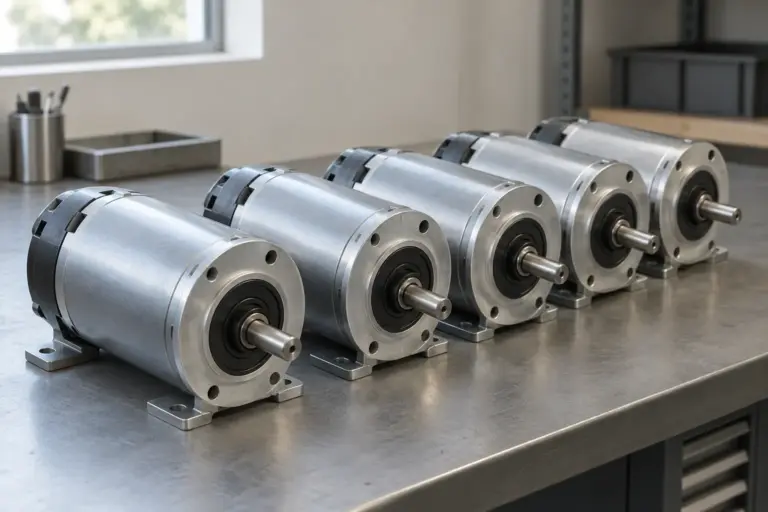
24 V electric motors in large quantities
Traydon has sourced 24 V electric motors with seals and covers in large quantities. What matters for series demand.
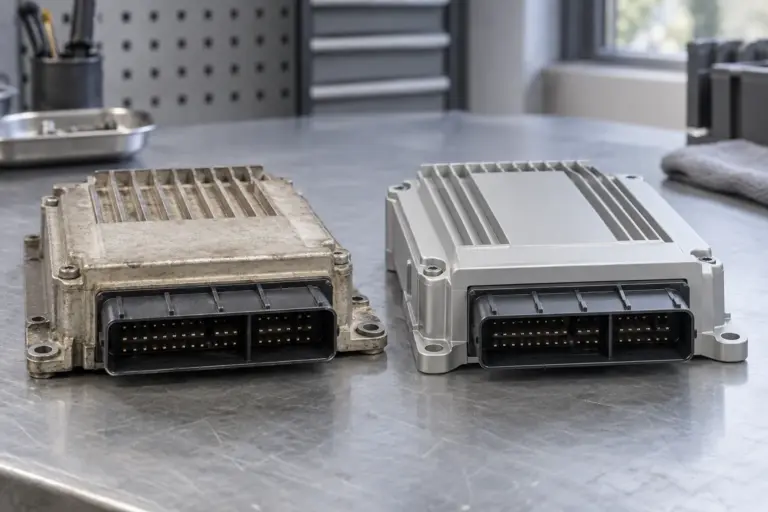
Discontinued parts: finding successors and alternatives
When a part is no longer made: how to check successor types, compatible alternatives or remanufacturing.
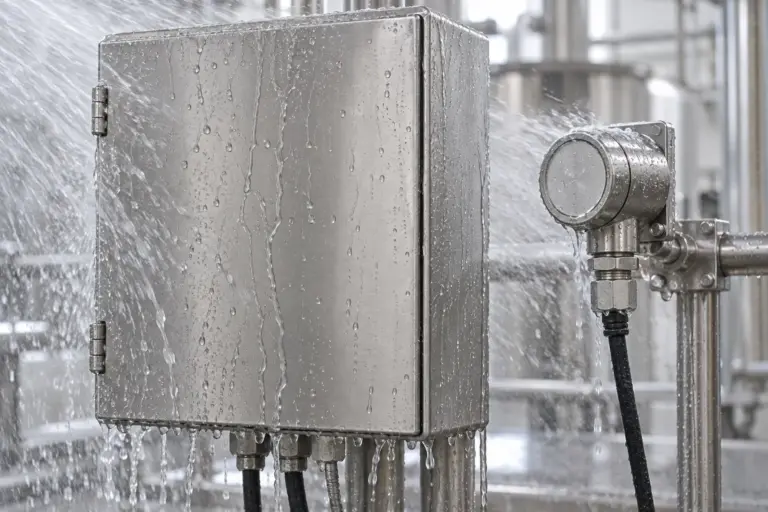
IP code degrees of protection: what IP65, IP67 and IP69 mean
How the IP code to IEC 60529 is structured and which degree of protection suits dusty, wet or hygienically cleaned areas.
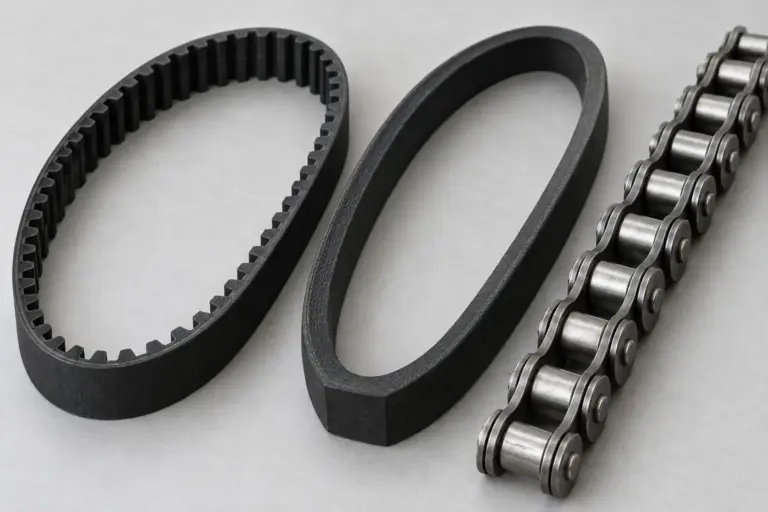
Toothed belts, V-belts, roller chains: reading the marking
Profile, length, width, pitch: how belt and chain designations are structured and what a request needs.
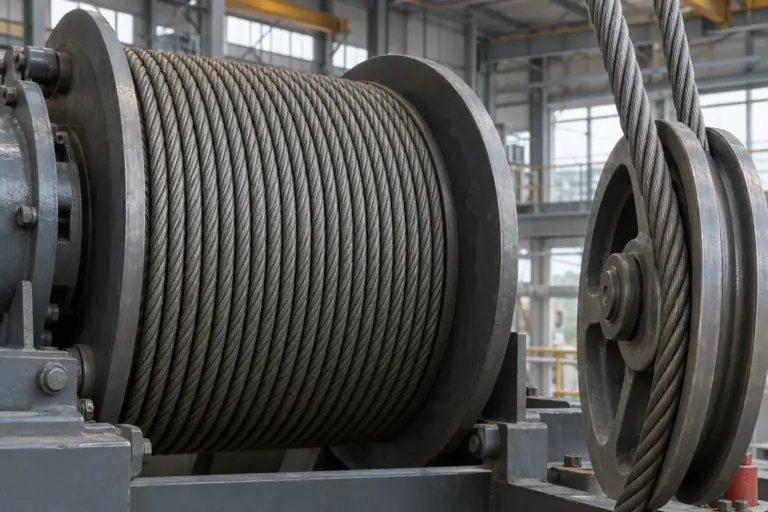
Inspecting and replacing crane ropes and sheaves
Discard criteria to ISO 4309, rope construction and groove profile: which details matter for a matching replacement rope.
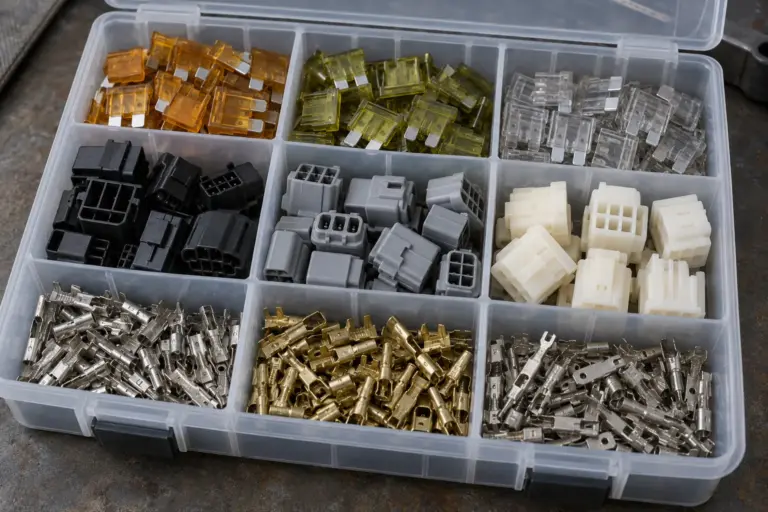
80 items of automotive electrics in one order
Fuses, connectors and contacts: one order covered 80 items of automotive electrics. How to keep a long parts list manageable.
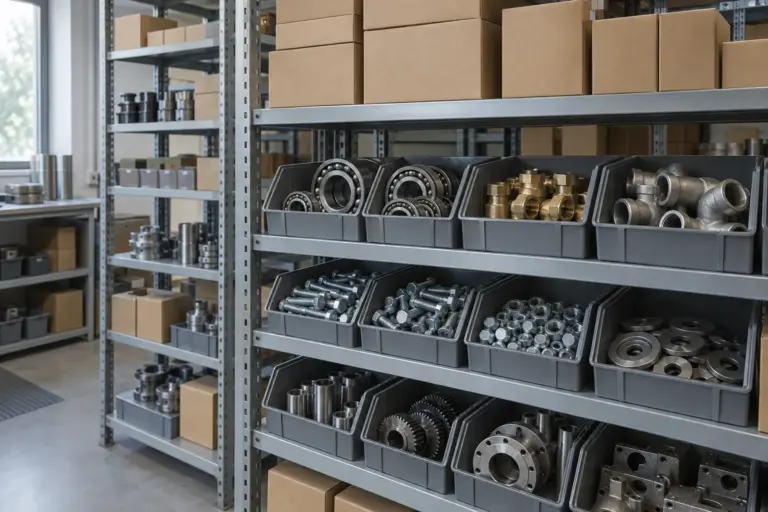
Identifying and stocking critical spare parts
Which spare parts belong in stock: criticality by failure impact, replacement lead time and failure probability.
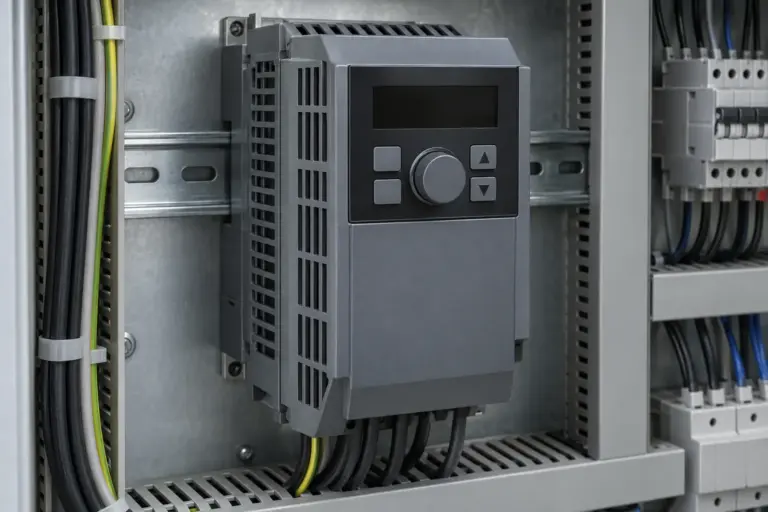
Replacing frequency inverters: what matters
Output current, supply voltage, braking resistor and parameters: what to consider when swapping a frequency inverter.

Industrial brakes: spring-applied, drum and disc brakes
How industrial brakes work, which parts wear and which details matter for replacement linings and thrusters.
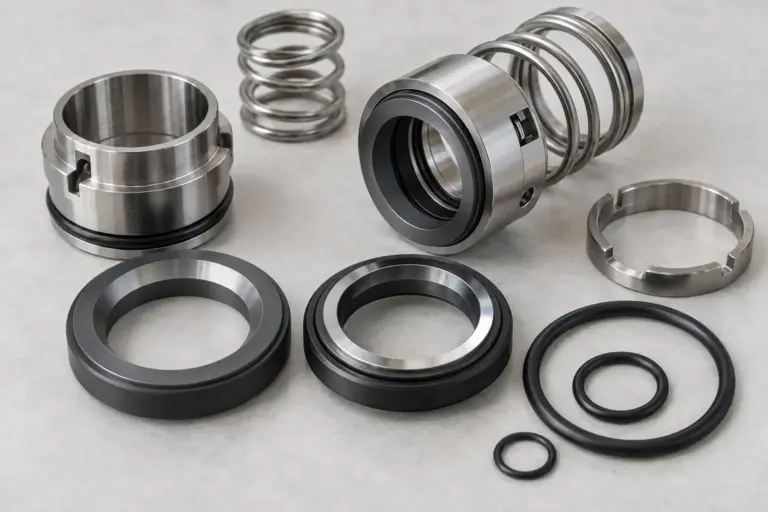
Mechanical seals for pumps
Structure, material pairings and installation dimensions: what makes a mechanical seal and which details the replacement needs.
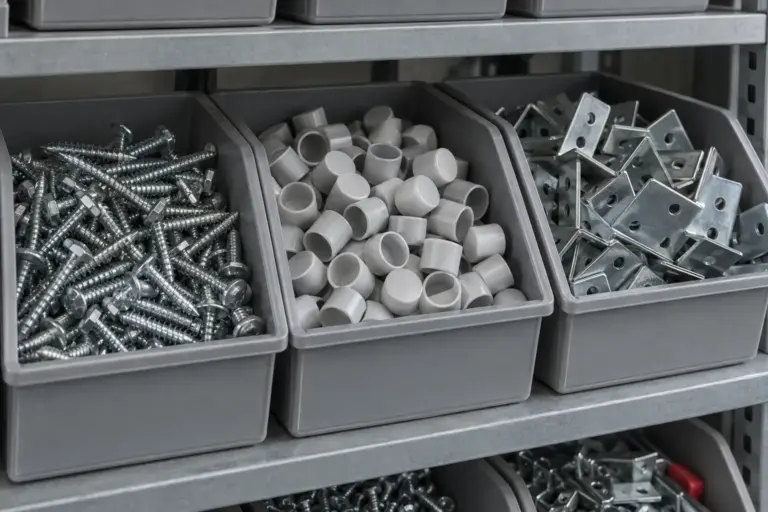
C-parts in wide variety
Screws, caps, brackets: several orders each covered over 100 items of standard parts. What bundled sourcing offers.
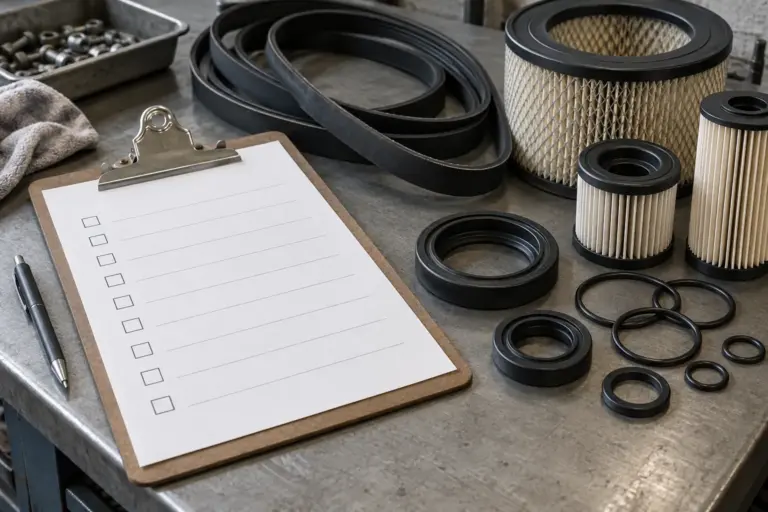
Wear parts list and maintenance plan against downtime
A wear parts list per machine and a maintenance plan make demand predictable and prevent rush orders.
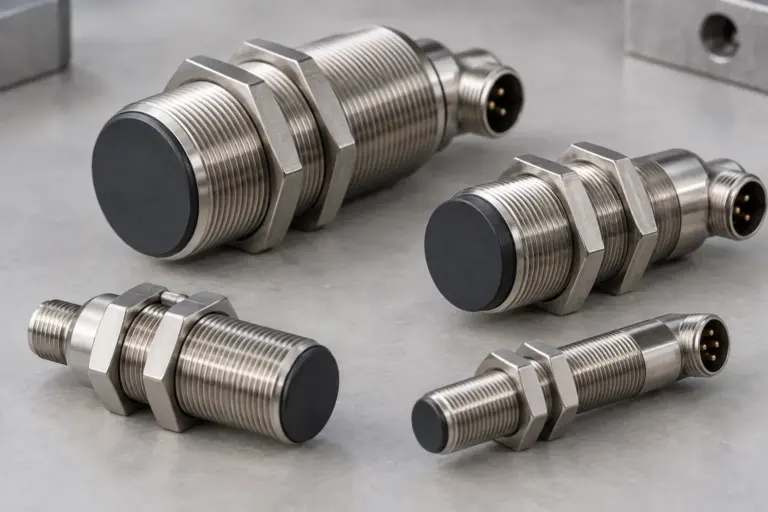
Proximity sensors: inductive, capacitive, optical
Which sensor type detects what and which details such as housing, sensing distance and PNP/NPN ensure a matching replacement.
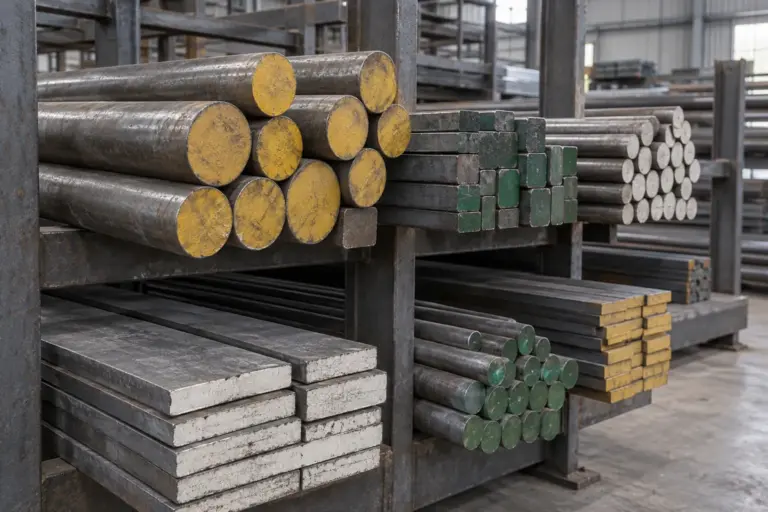
Reading steel designations to EN 10027
What S355J2, C45 or 42CrMo4 mean and how steel name and material number belong together.
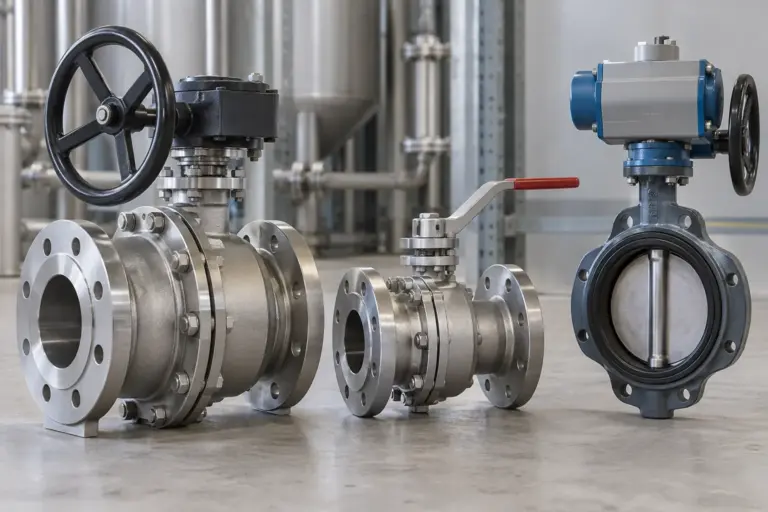
Industrial valves and pressure ratings: PN and Class
Ball valve, butterfly, gate or globe valve and the pressure ratings PN and Class: which details a valve request needs.
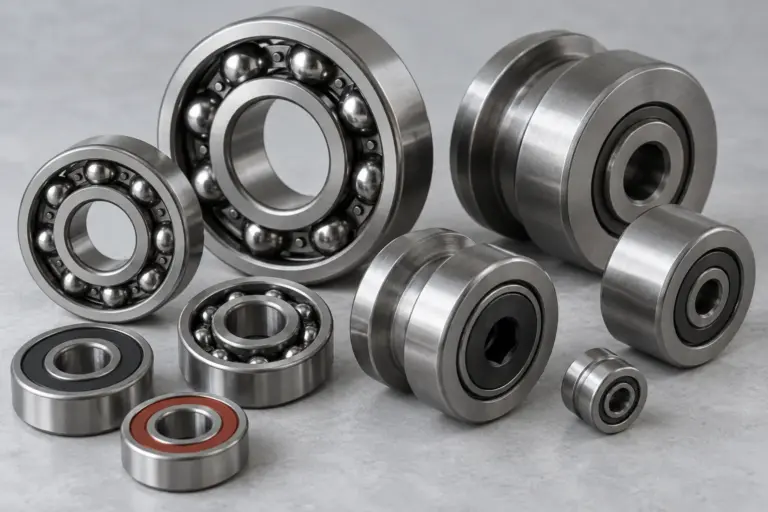
Rolling bearings from a list
One order covered 55 items of rolling bearings, including track rollers. Why the full bearing designation with suffixes matters.
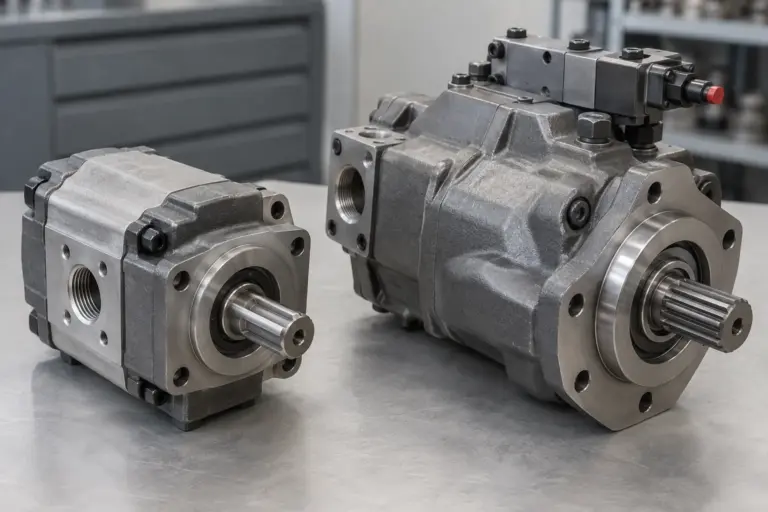
Hydraulic pumps: designs and ratings for replacement
Gear, vane and piston pumps compared, and which ratings are needed for a matching replacement pump.
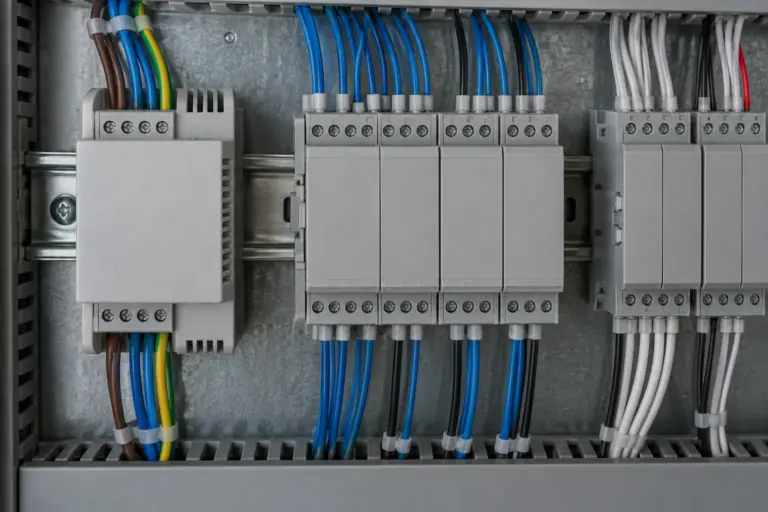
Replacing older control modules
Order number, revision and program backup: which details matter when replacing older control system modules.
Inspection documents to EN 10204: 2.2, 3.1 and 3.2
What test report 2.2 and inspection certificates 3.1 and 3.2 certify and when which document is required.
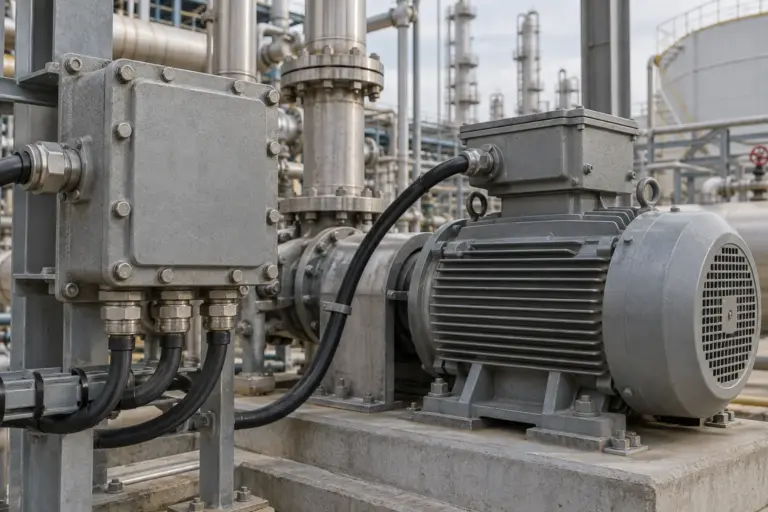
Reading Ex marking on spare parts
Equipment group, category, type of protection, gas group and temperature class: what Ex marking means for the replacement.
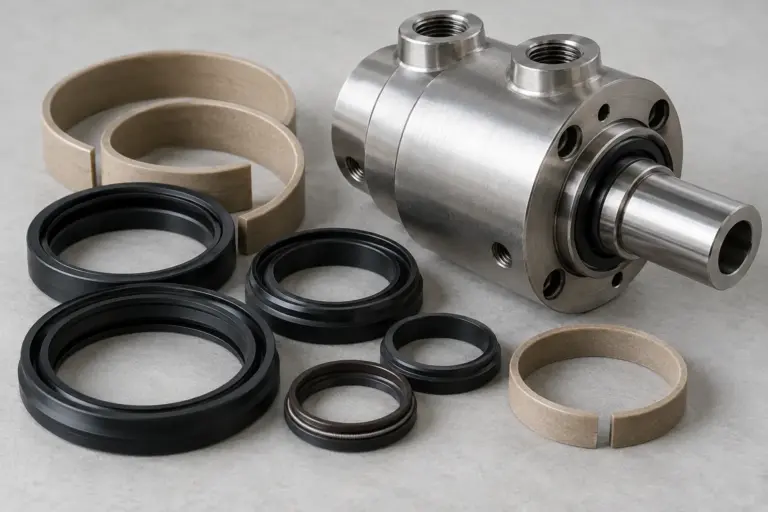
Seal kits for hydraulic cylinders and a rotary union
Traydon sourced seal kits for a rotary union and hydraulic cylinders. Which details ensure a matching seal kit.
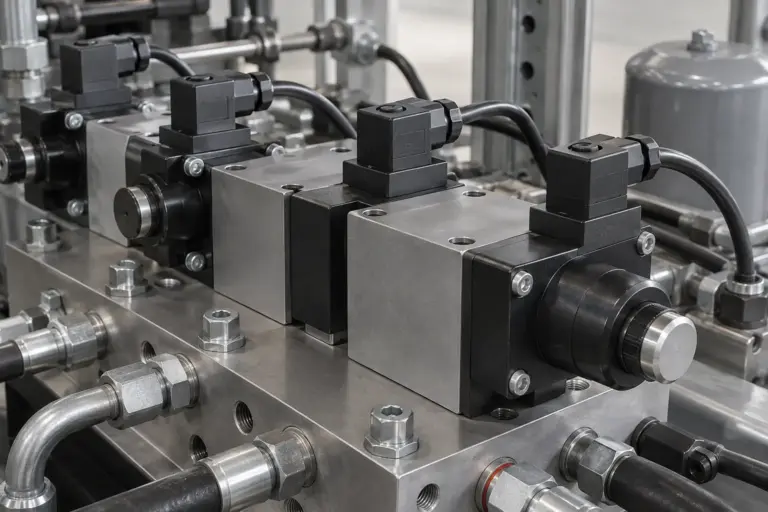
Hydraulic valves: directional, pressure and flow valves
Which valve types exist and why size, mounting pattern, symbol and solenoid voltage decide the replacement.
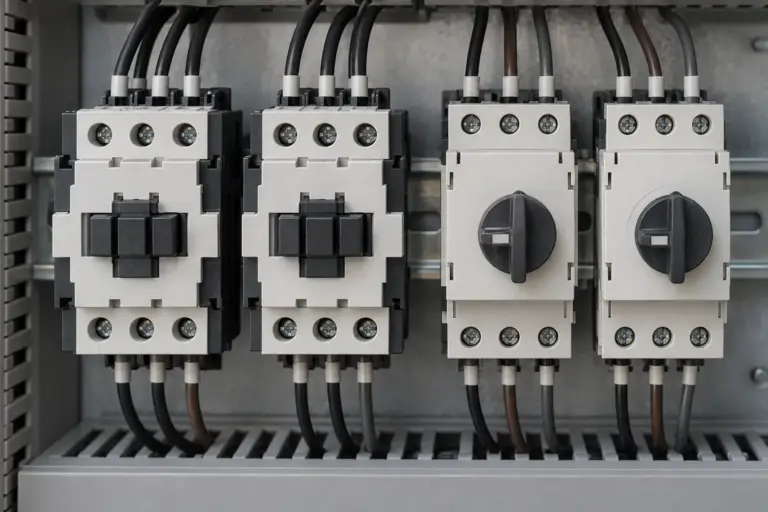
Choosing contactors and motor protection breakers
Utilisation category AC-3, rated current and coil voltage: which details matter for contactors and motor protection breakers.
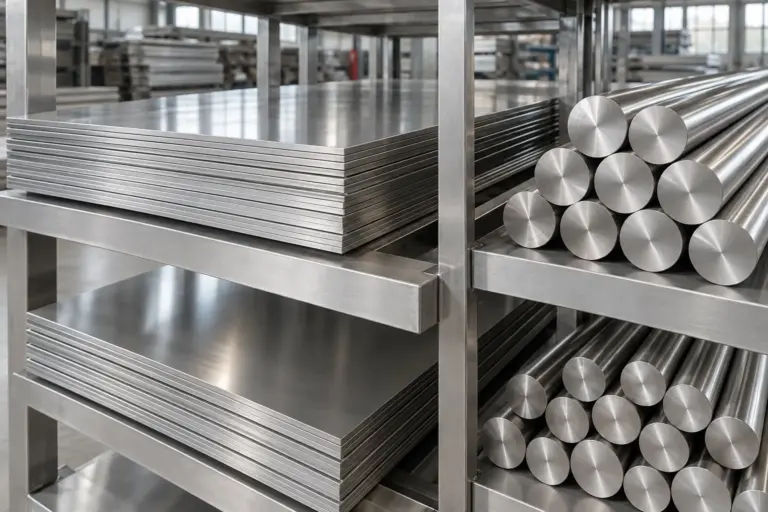
Stainless steel 1.4301 or 1.4404: differences and selection
Why molybdenum makes the difference and when the higher-alloyed stainless steel 1.4404 is the better choice than 1.4301.
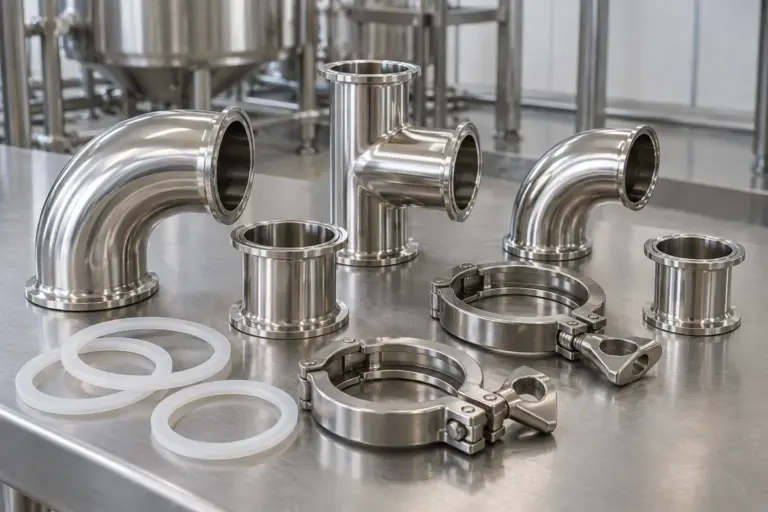
Hygienic components and H1 lubricants
Smooth surfaces, no dead spaces, suitable elastomers and H1 lubricants: what matters for spare parts in food plants.
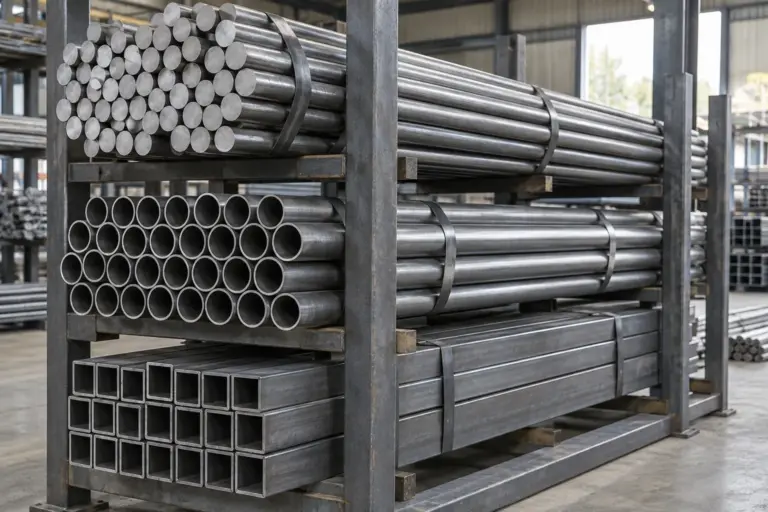
Round steel and tubes in 6 m lengths
Bright round steel S355, seamless and welded tubes, hollow sections: what the details for steel products mean.
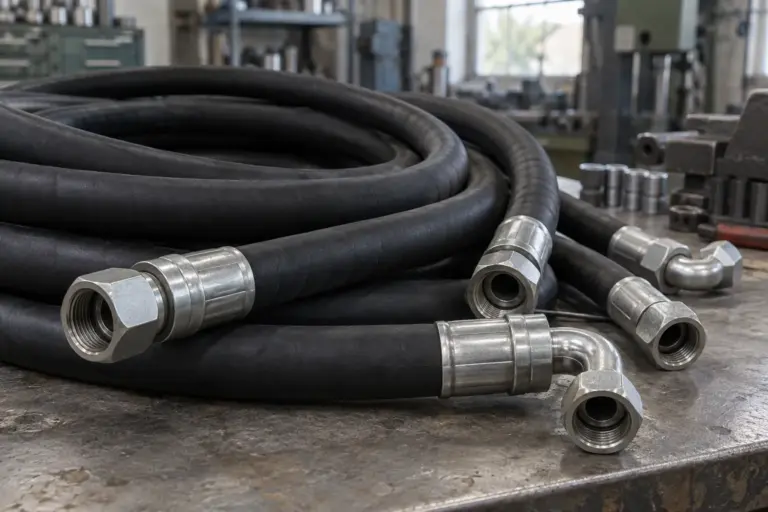
Hydraulic hoses: marking, pressure rating, replacement
What hose assembly markings mean, which details matter for replacement and when hoses should be changed.
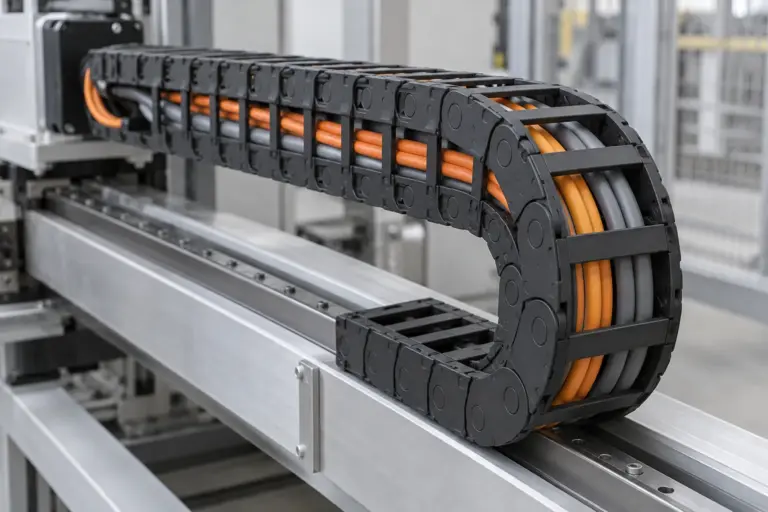
Cables for cable carriers: structure and selection
Why moving cables need their own structure and which details such as bending radius and sheath material matter.
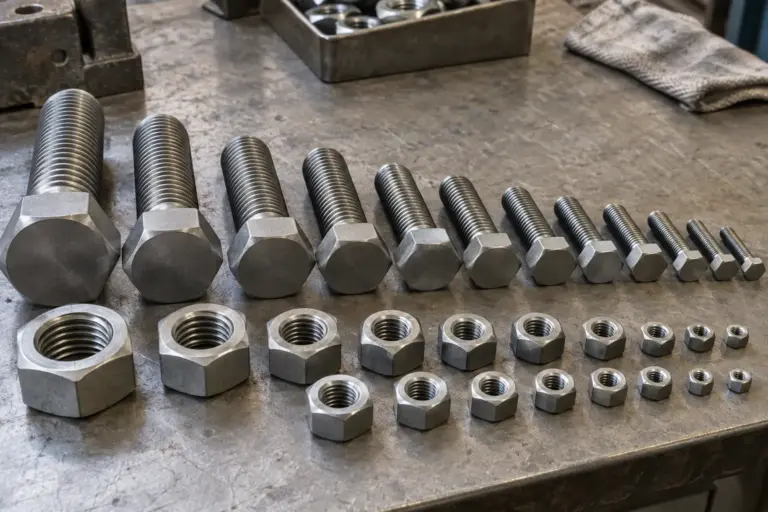
Property classes of bolts: 8.8, 10.9, 12.9
What the numbers on the bolt head mean, which nut matches and what applies to coatings and stainless bolts.
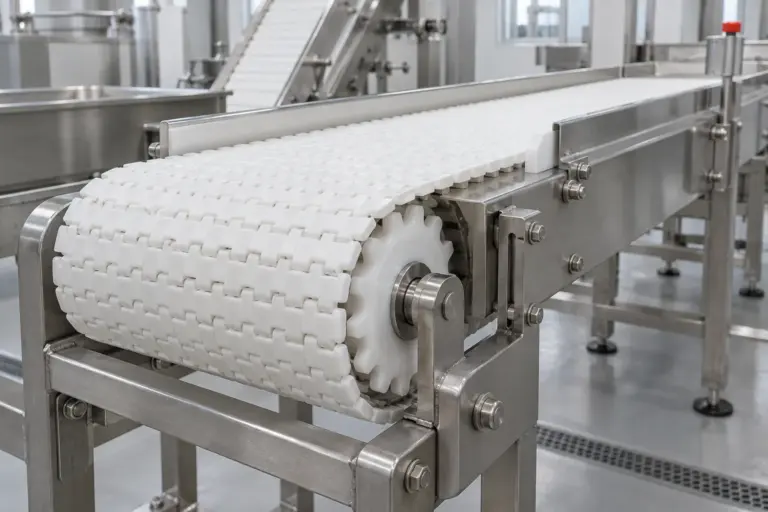
Conveying with modular belts
How plastic modular belts are built, what wears on them and which details matter for replacement modules and sprockets.
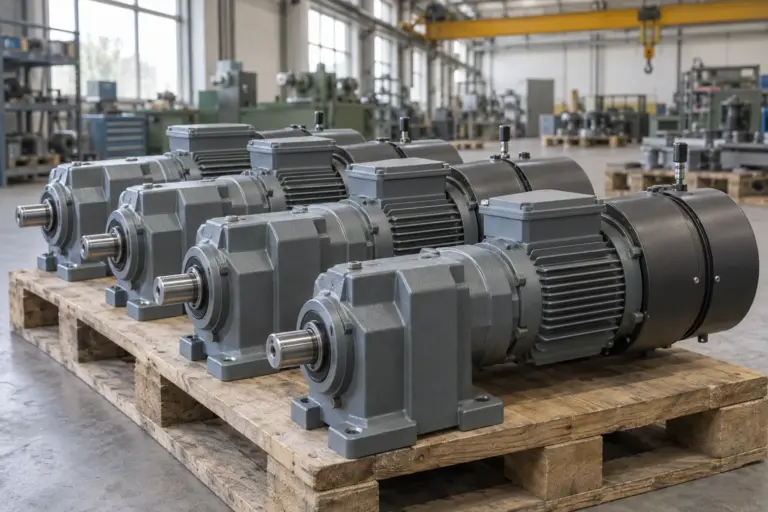
Geared motors for crane systems
One order covered 61 geared motors for crane systems. Which nameplate data ensure a matching replacement.
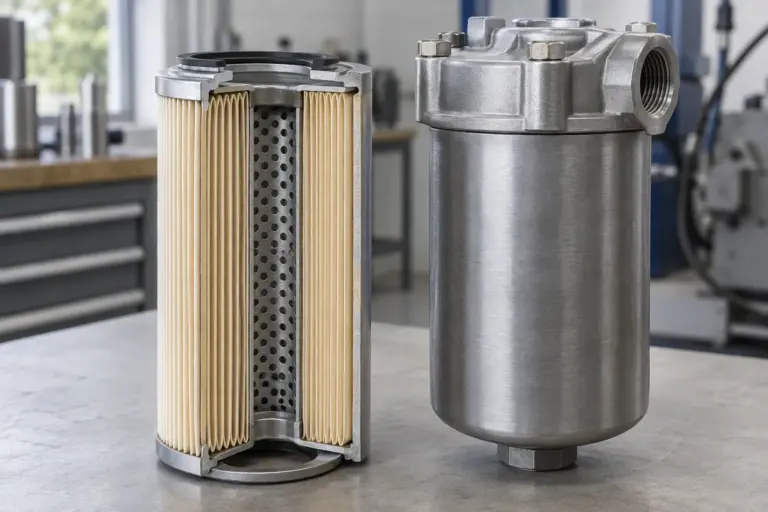
Hydraulic filters and oil cleanliness to ISO 4406
Why clean oil determines the life of pumps and valves and how cleanliness code and filter rating relate.

Gearbox types: helical, bevel, worm
How helical, bevel and worm gearboxes differ and which ratings are needed for the replacement.
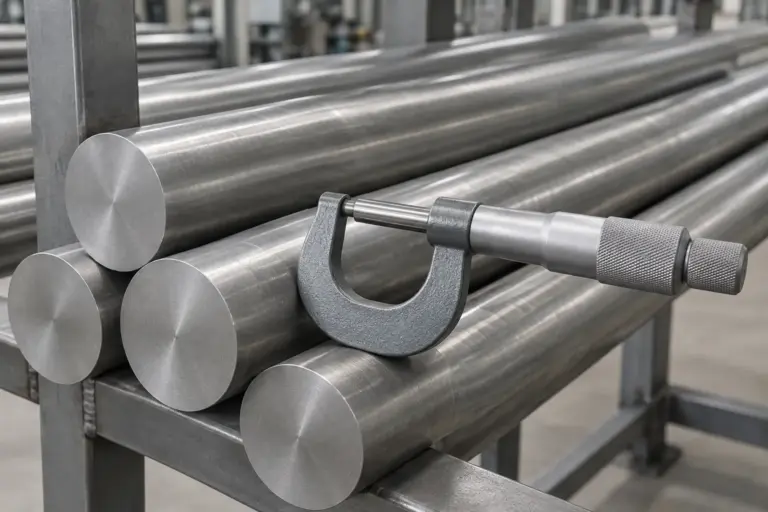
Bright steel: delivery conditions and tolerances
Drawn, peeled or ground: which tolerance classes bright steel achieves and how to state them in a request.
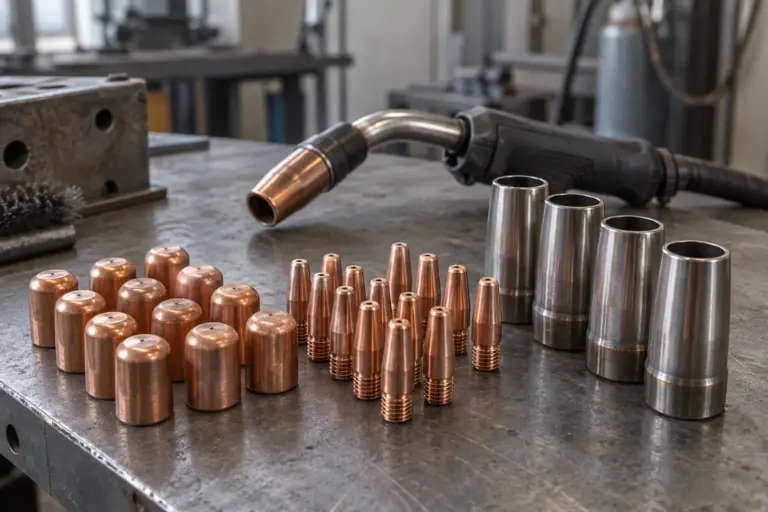
Wear parts on welding robots
Electrode caps, contact tips, gas nozzles and wire feed: which parts wear on welding robots and what the request needs.
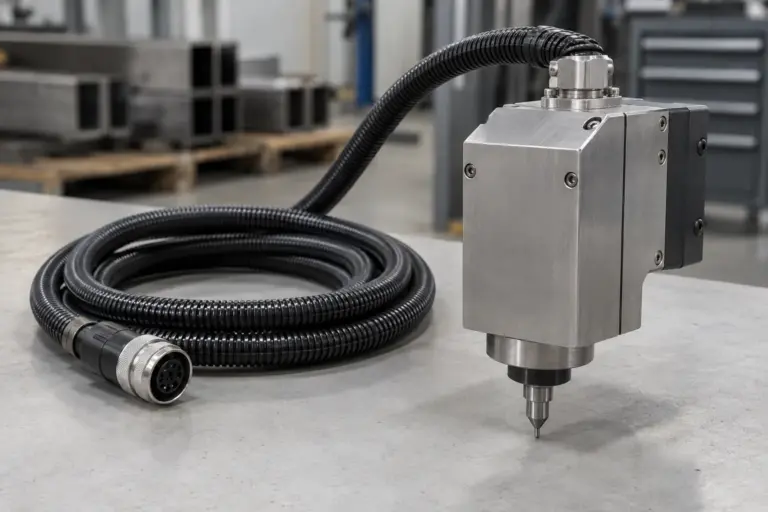
Spare parts for marking systems
One order covered 43 items, including cables for marking heads. Why moving cables on marking systems are wear parts.
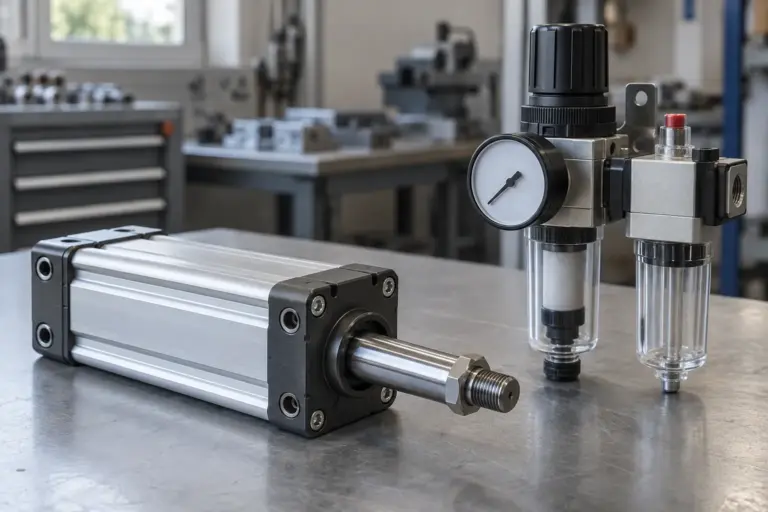
Pneumatic cylinders to ISO 15552 and service units
What ISO 15552 specifies for pneumatic cylinders and which details matter for cylinder and service unit.
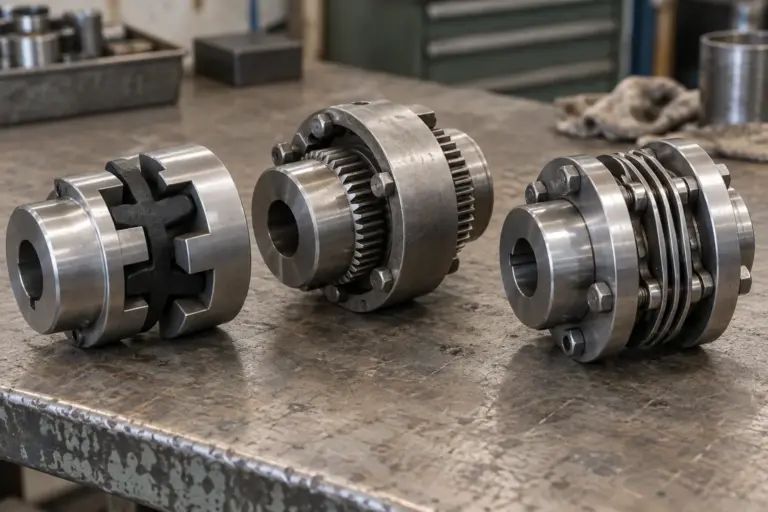
Shaft couplings: flexible, gear and disc couplings
Which coupling compensates misalignment, damps shocks or transmits without backlash and which details matter for replacement.
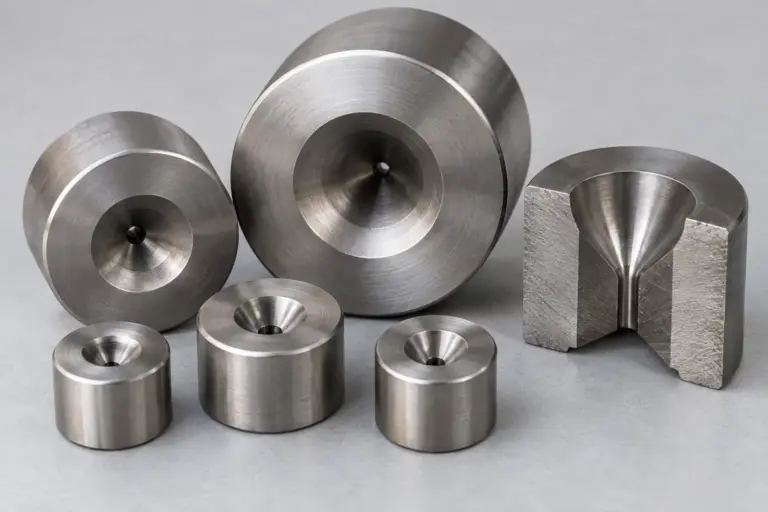
Drawing dies in wire drawing machines
Carbide or diamond, reduction cone and bearing zone: how drawing dies are built and how to recognise wear.
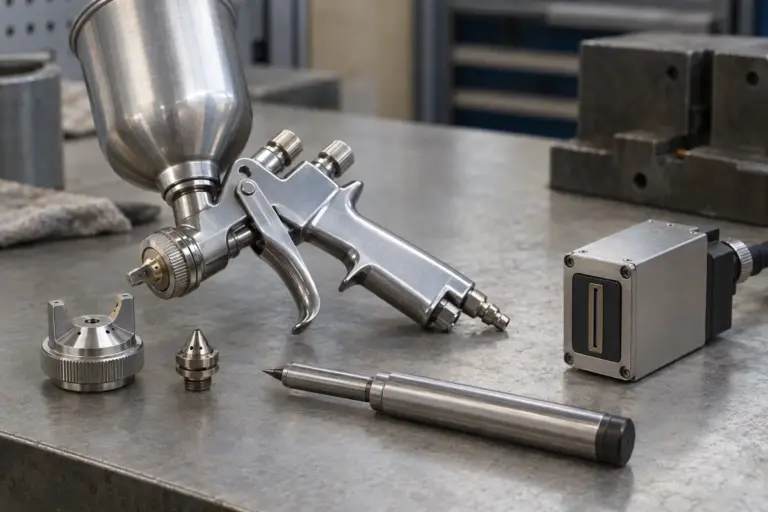
Painting and marking technology: wear parts at a glance
Nozzles, air caps, marking pins and print heads: which parts wear in painting and marking systems and what the request needs.